


Process Safety Training Solutions
Cognascents Consulting Group delivers process safety training that helps engineers, operators, and leaders understand hazards and apply the programs they manage. From process safety management (PSM) training and Risk Management Program (RMP) awareness to Hazard and Operability (HAZOP) and Layer of Protection Analysis (LOPA) facilitation training, our instructors connect engineering principles, facility-specific procedures, and practical exercises to your team’s responsibilities.
Our Approach
A program is only as strong as the team that runs it.
Process safety training builds the knowledge employees need to operate, maintain, and analyze hazardous processes safely. OSHA 29 CFR 1910.119(g) requires initial training in the process overview and operating procedures for each employee involved in operating a covered process, refresher training at least every three years, and documentation that each employee understood the training; EPA applies the same requirements to RMP Program 3 processes under 40 CFR 68.71. Compliance sets the floor. The value of your PSM program, PHAs, and RMP documentation depends on whether the people operating them understand why they work the way they do. Our training is built to close that gap.
|
Step 01
Understand the TeamWe start by learning who we’re training: their roles, current knowledge, and where the gaps actually are. The course targets what your people need, not a generic syllabus. |
Step 02
Ground It in Your ProgramsTraining is built around your real PSM program, PHAs, RMP documentation, and site-specific procedures, so the principles connect directly to the work your team does. |
Step 03
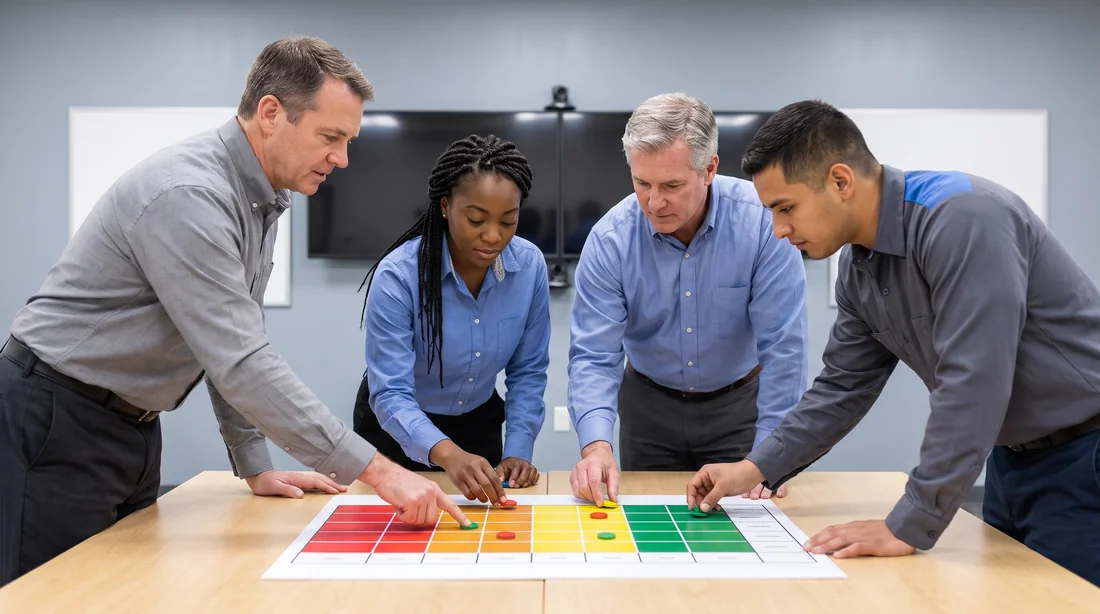
Learn by DoingParticipants work through hands-on exercises using real scenarios and case studies, applying HAZOP, LOPA, and other techniques under realistic constraints rather than sitting through slides. |
Step 04
Transfer to the JobPeople leave able to apply what they learned to your facility, with options for the refresher training 1910.119(g)(2) requires at least every three years and customized follow-up as your program and team evolve. |




|
“A team that understands why a program works the way it does makes better decisions when the procedure doesn’t have a clear answer.”
|
 |
Why Cognascents
Why choose Cognascents for process safety training

MULTIDISCIPLINARY EXPERTISE
Training Backed by the Full Process Safety Team
Cognascents brings together 65+ engineers across process safety, asset integrity, and process engineering. Our instructors draw on this breadth to explain how hazard analysis, equipment integrity, procedures, and safeguards work together. Participants learn from field experience and the codes and standards relevant to their roles, with access to expertise beyond a single course topic. |

PRACTICE WITH REAL SCENARIOS
Apply the Method During Training
Exercises and case studies give participants a chance to identify hazards, evaluate safeguards, and discuss decisions with an experienced instructor before applying those skills on the job. |

BUILT AROUND YOUR TEAM
Relevant to Your Roles and Facility
We work with your team to understand roles, current practices, and learning needs, then tailor the examples and format accordingly. Discussion and feedback help participants understand the reasoning behind requirements and apply it to their responsibilities. |
Course Offerings
Training programs we deliver for process safety teams.
PSM Awareness WorkshopsFacility-Specific PSM TrainingRMP Awareness WorkshopsHAZOP & LOPA Facilitation and PHA Leader TrainingRelief Valve Sizing TrainingFlare System Design & Analysis TrainingFacility-Specific RMP TrainingCustomized Course DevelopmentInstructor-Led On-Site and Virtual Delivery
Standards & Codes We Work To
The regulatory requirements that govern process safety training.
OSHA 29 CFR 1910.119(g) — initial and refresher training for employees operating a covered processOSHA 29 CFR 1910.119(h)(3) — contract employer training of contract employeesOSHA 29 CFR 1910.119(j)(3) — training for employees maintaining the ongoing integrity of process equipmentOSHA 29 CFR 1910.119(e)(4) — PHA team member knowledgeable in the methodology being usedEPA 40 CFR 68.71 — training for RMP Program 3 processes (68.54 for Program 2)
IS YOUR TEAM READY TO RUN YOUR PSM PROGRAM?
Let’s talk about where your team’s process safety knowledge actually stands.
Contact us to schedule your training or talk through what your team needs. We’ll recommend the right format and build it around the programs your team actually operates.
Keep reading for what your team gains, plus the services and content that connect to your training. ↓↓
What You Gain
The outcomes a well-designed process safety training program delivers.
Training that focuses on principles rather than procedures produces a different kind of team. These are the outcomes clients see from a Cognascents training engagement.
|
PROGRAM UNDERSTANDING
A team that understands why the program works the way it doesProcess safety training explains the purpose of program requirements and how employee responsibilities connect to hazard prevention, emergency preparedness, and ongoing program implementation. |
DECISION QUALITY
Better hazard identification and risk decisions across the teamHAZOP and LOPA training helps participants identify credible deviations, evaluate safeguards, and contribute relevant operating knowledge during process hazard analysis workshops. |
|
|
KNOWLEDGE DISTRIBUTION
Program knowledge distributed across the team, not concentrated in one personTraining systematically transfers understanding so your program doesn’t depend on one or two people who happen to remember why it was built that way. |
CONTEXTUAL RELEVANCE
Instruction grounded in your actual program, not hypothetical examplesCognascents training is anchored in your real PSM program and process units, so the transfer from classroom to the next PHA session is immediate. |
|
Related Services
Services that connect to your training program
Training is most powerful alongside the process safety program it builds capability for.
|
THE PROGRAM YOUR TRAINING SUPPORTS
PSM Program Development and SupportTraining works best alongside the program it builds capability for. We help you build both together. |
THE SESSIONS YOUR TRAINING PREPARES YOUR TEAM FOR
Process Hazard Analysis (PHA)HAZOP and LOPA training builds the team capability to participate meaningfully in the studies we facilitate. |
THE AUDIT YOUR TRAINED TEAM SUPPORTS
PSM/RMP Compliance AuditsA well-trained team performs better during an audit, and understands the findings that come out of it. |
Related Content
Process safety training resources and articles
Case studies and technical articles from the engineers who lead these engagements.
|
ARTICLE | PROCESS SAFETY
Developing a Robust PSM Program: A Practical RoadmapThe planning and technical discipline it takes to build a PSM program your team can actually sustain. |
ARTICLE | PROCESS SAFETY
Common Process Hazard Analysis Pitfalls to AvoidThe mistakes teams make most often during a PHA, many of which come down to gaps in training rather than effort. |
CASE STUDY | LITHIUM-ION BATTERY MANUFACTURER
Fortifying Critical PSM Program Elements for a Lithium-Ion Battery ManufacturerStrengthening PSM program elements, training included, for an EV battery manufacturer handling flammable and reactive chemicals. |
PROCESS SAFETY TRAINING QUESTIONS, ANSWERED DIRECTLY
Frequently asked questions about PSM, HAZOP and LOPA training
What process safety training does OSHA PSM require?
Under 29 CFR 1910.119(g)(1), each employee involved in operating a covered process, and each employee before operating a newly assigned process, must be trained in an overview of the process and its operating procedures, including specific safety and health hazards, emergency operations including shutdown, and safe work practices. Paragraph (j)(3) adds training for maintenance employees, and (h)(3) makes contract employers responsible for training their own workers.
How often is refresher training required?
At least every three years under 1910.119(g)(2), and more often if necessary, with the frequency set by the employer in consultation with the employees operating the process. EPA applies the same requirement to RMP Program 3 processes under 40 CFR 68.71(b). Changes do not wait for the refresher cycle: under (l)(3), affected employees must be informed of and trained in a change before startup of the changed process.
What training documentation does OSHA require?
Paragraph (g)(3) requires the employer to ascertain that each employee has received and understood the required training, and to keep a record with the employee’s identity, the date of training, and the means used to verify understanding. An attendance sheet documents receipt, not understanding; the record needs a verification method such as a written test, a demonstration, or observed performance.
Who needs HAZOP or LOPA training?
Every PHA team must include at least one member knowledgeable in the methodology being used under 1910.119(e)(4), and the facilitator is usually that person. Operators, engineers, and supervisors who serve on PHA teams also contribute more, and challenge safeguards more effectively, when they understand how HAZOP deviations and LOPA independent protection layer credit work. Our PHA services are a natural next step after this training.
Should process safety training be generic or facility-specific?
Both, in sequence. Awareness courses establish the regulatory framework and vocabulary, but training under (g)(1) must cover the specific process and its operating procedures, which a generic course cannot do. The most effective programs anchor exercises in the facility’s own piping and instrumentation diagrams (P&IDs), PHA scenarios, and incident history, so participants practice on the hazards they will actually manage.
Talk to an engineer about training for your process safety team
Talk to a Cognascents engineer about your training needs. We design and deliver programs for process safety teams, from a half-day PSM awareness session to a custom HAZOP facilitation curriculum built around your operation.