Case Study
Alarm Rationalization for a Refinery
Client: Refinery | Location: USA
Cognascents is supporting a refinery with a facility-wide alarm rationalization effort aimed to improve alarm system performance, enhance operator effectiveness, and align with industry best practices. To date, the program has focused on a pilot subset of units, targeting reduction of alarm load, improvement of alarm quality, and minimization of alarm flooding during abnormal operating conditions – directly improving operator focus and response during critical events.
The Challenge
Like many mature operating facilities, the site experienced:
- Excessive alarm counts across multiple process units,
- High concentrations of alarms occurring during abnormal situations,
- Inconsistent alarm prioritization and classification, and
- Limited differentiation between actionable alarms and informational or redundant alerts.
These challenges increased operator workload, degraded situational awareness, and elevated operational risk – particularly during periods when rapid and accurate decision-making is most critical.
Cognascents Approach
Cognascents facilitated a structured, unit-by-unit alarm rationalization across the entire refinery, applying a consistent and repeatable methodology to each alarm point.
Each alarm was reviewed against the five fundamental alarm attributes to confirm that it was:
- Abnormal,
- Associated with a credible consequence,
- Actionable by the operator,
- Relevant to the operating state, and
- Unique and non-redundant.
For each retained alarm, the team documented:
- Alarm type and classification,
- Engineering units and setpoints,
- Alarm likely Cause and Consequences of inaction,
- The recommended Operator response actions,
- Consequence Severity and the available response time,
- The calculated priority and any required changes requested by operations, and
- Cross-references to applicable PHA documentation.
Collaborative workshops with operations, engineering, and process safety personnel ensured that alarm decisions reflected site practices, operational realities, and risk tolerance.
Results & Impact
The alarm rationalization effort delivered immediate and measurable improvements in alarm system performance and usability:
- Significant reduction in total annunciated alarms across reviewed units.
- A large portion of alarms were either downgraded in priority or removed entirely due to redundancy or lack of consequence.
- Improved distribution of alarm priorities aligned with site KPIs and industry guidance.
- Meaningful reduction in alarm flooding during abnormal operations.
Figure 1: Alarm Priority Category Shifts - Sample of Units
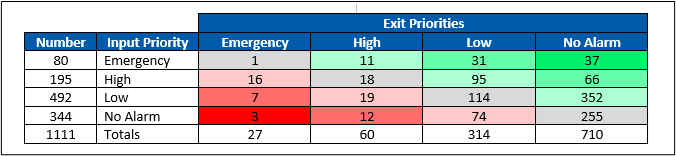
Figure 1 demonstrates how alarm priorities were corrected through rationalization. Of eighty (80) alarms initially classified as Emergency, only one (1) remained Emergency following review. Eleven (11) were reassigned to High priority, thirty-one (31) to Low priority, and thirty-seven (37) were removed entirely. Of the removed alarms, twenty-four (24) were identified as redundant or unnecessary, six (6) were inactive tags, and seven (7) were unneeded bad value alarms.
In addition, several new alarms were added to ensure operators are alerted to critical conditions: three (3) new Emergency alarms reflecting safe operating limits, twelve (12) new High alarms, and seventy-four (74) new Low alarms focused on conditions requiring operator corrective action that were previously unalarmed. This redistribution reflects a major improvement in alarm quality – ensuring Emergency alarms represent truly critical conditions while operators are appropriately alerted to other important process deviations.
Figure 2: Annunciated Alarm Distribution
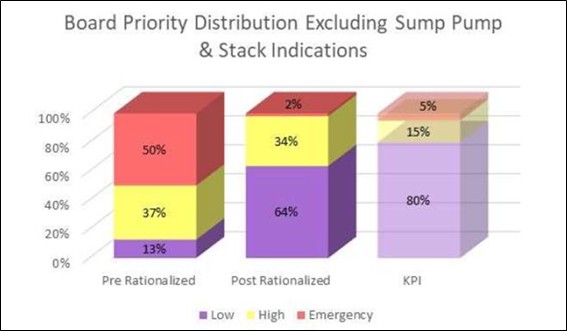
Figure 2 compares board operator alarm distributions before and after rationalization against KPI targets defined in the Alarm Management and Guidelines for Alarm Response.
Post-rationalization results show a pronounced shift toward Low-priority alarms, with substantial reductions in High and Emergency alarms, bringing the system much closer to recommended performance benchmarks. This directly improves operator workload, focus, and response effectiveness.
Value to the Client
By rationalizing alarms across the facility, the client achieved:
- Improved operator situational awareness,
- Reduced risk during abnormal and upset conditions,
- A more maintainable and defensible alarm system, and
- Alignment with recognized alarm management standards.
Collectively, these improvements position the refinery for sustained gains in operational reliability, safety performance, and regulatory compliance.
Meet the Author
Eric Nussberger – Senior Process Safety Engineer

Eric is a senior process safety engineer with over 25 years of experience in process design and troubleshooting, project conception and development, and advanced process control. He specializes in Safe Operating Limits (SOL) development, hazard reviews, and control system optimization.
Related Cognascents Solutions
At Cognascents, we have the expertise to meet your needs. Explore the variety of related services we offer and discover how our tailored approach can support your business.
Our mission is to empower our clients with innovative solutions that enhance process safety, reliability, asset integrity, and technical business acumen. To elevate your engineering solutions, please contact us today.